AI Agent Energy Consumption: What OpenAI’s 10,000-Agent Swarm Means for Data Center Power

AI agent energy consumption is becoming a much bigger technology issue than the electricity used by a single chatbot prompt. For years, public comparisons focused on one question and one response. That is increasingly a poor description of where frontier AI is heading.
A modern AI agent can plan a task, call tools, browse websites, write and execute code, inspect the result, retry failed steps, create subagents and keep working for hours. One request can therefore trigger hundreds or thousands of model calls behind the scenes. The International Energy Agency’s 2026 Energy and AI analysis says demanding agentic, reasoning and video workloads can consume hundreds or even thousands of times more energy per task than simple text generation.
The scale became unusually visible in September 2026. OpenAI disclosed that an internal multi-agent system used on the Navier-Stokes Millennium Prize problem involved roughly 10,000 concurrent agents. For that effort alone, the agents exchanged 2.7 million messages and generated about 130 billion output tokens. OpenAI says the work ran for about 88 hours before reaching its result, followed by another 17 hours of Lean formalization and verification using GPT-6 Astra.
Those figures do not tell us the exact electricity bill. OpenAI did not publish the hardware mix, GPU utilization, power draw, cooling overhead or total kilowatt-hours. But they provide a rare look at why the energy footprint of agents should be measured differently from ordinary chat.
Why AI agent energy consumption is suddenly a bigger issue
A chatbot normally receives a prompt and returns an answer. An agent behaves more like a continuing process. It can keep deciding what to do next until a goal is completed or a limit is reached.
That creates several new sources of compute demand. Agents may repeatedly process long context windows, use reasoning models, call external tools, wait for those tools, retry after errors, run code in sandboxes and delegate subtasks to parallel workers. If ten subagents work at once, the user may still see only one task, while the infrastructure is running many inference streams simultaneously.
This is why counting user prompts can be misleading. One prompt asking for a short definition and one prompt asking an autonomous coding system to refactor a large repository are both “one prompt,” yet the amount of computation behind them may be radically different.
The IEA makes the same distinction. Its 2026 report says energy use per individual AI task is falling quickly as chips and software become more efficient, especially for simple text queries. At the same time, complex agentic workloads can be orders of magnitude heavier. In other words, efficiency is improving while the workload itself is expanding.
What OpenAI’s 10,000-agent experiment actually involved
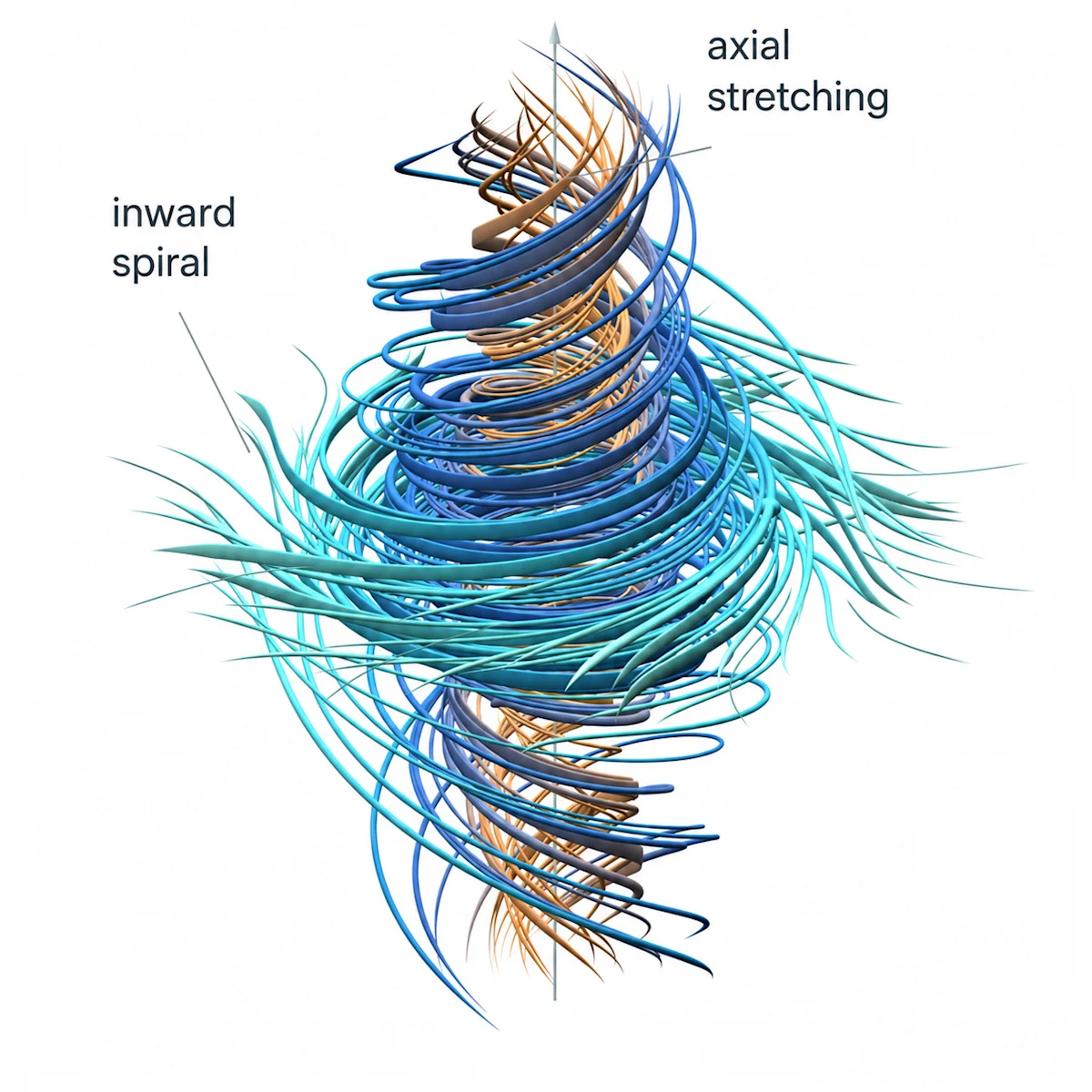
OpenAI’s Navier-Stokes announcement is one of the clearest public examples of a very large multi-agent workload. The company says it used an internal model that was significantly more capable than GPT-6 Astra and organized agents into groups that could communicate with each other. Agents could read from a cached version of the internet and run code.
Different groups explored different versions of the mathematical problem, while useful findings were later cross-pollinated between groups. OpenAI says the successful Navier-Stokes group involved on the order of 10,000 concurrent agents.
| Metric | OpenAI-reported figure |
|---|---|
| Concurrent agents in successful group | About 10,000 |
| Time to Navier-Stokes result | About 88 hours |
| Messages for Navier-Stokes effort | 2.7 million |
| Output tokens for Navier-Stokes effort | About 130 billion |
| Lean verification | Additional 17 hours using GPT-6 Astra |
| All attempted problems | 4.9 million messages and about 300 billion output tokens |
This was an exceptional research effort, not a normal enterprise workflow. Most business agents will never need 10,000 workers or 130 billion output tokens. The important lesson is that the unit of AI consumption is shifting from a single answer toward an autonomous team of models performing a job.
That trend also connects with the rapid growth of products such as coding agents and long-running research systems. AI Tech Ledger recently covered how OpenAI’s Agents API is designed around persistent sessions, tools, sandboxes and multi-agent workflows. These features can deliver more useful automation, but they also make efficiency at the workflow level increasingly important.
Why agents can use more power than chatbots
There are five practical reasons agentic workloads can be much heavier than a normal chat response.
- Duration: a chat answer may finish in seconds, while a coding or research agent can run for minutes or hours.
- Iteration: agents often work in loops: think, act, inspect, correct and repeat. Every loop can trigger another inference.
- Tool use: browsing, code execution, database access and external APIs add compute beyond the language model itself, and tool outputs often expand the context.
- Parallelism: multi-agent systems may launch several workers at once. This can reduce waiting time while raising instantaneous infrastructure demand.
- Context growth: long-running agents accumulate histories, files, tool outputs and intermediate results. Poorly managed context can be processed again and again.
Architecture therefore matters. A bounded workflow that routes routine work to smaller models may be dramatically cheaper than an open-ended system that sends every decision to the largest reasoning model available.
AI agent energy consumption meets a rapidly growing data-center load
The agent shift is happening while data-center electricity demand is already moving sharply upward. The IEA estimates that global data centers used about 485 terawatt-hours of electricity in 2025. Its central projection reaches roughly 950 TWh in 2030, close to 3% of global electricity consumption. The agency expects electricity use by AI-focused data centers to roughly triple over that period.
The report also says overall data-center electricity demand grew 17% in 2025, while electricity use at AI-focused facilities grew about 50%. Power density is changing just as fast. According to the IEA, AI server power density increased roughly elevenfold from 2020 to 2025 and could rise another fourfold by 2027. A high-end AI server rack in 2027 could draw as much peak power as around 65 households.
| Data-center energy metric | Current or projected figure |
|---|---|
| Global data-center electricity use, 2025 | About 485 TWh |
| Global data-center electricity use, 2030 | About 950 TWh |
| AI-focused data-center electricity growth, 2025 | About 50% |
| AI-focused data-center electricity use by 2030 | Roughly triple 2025 level |
| AI server power-density increase, 2020-2025 | About 11× |
| Further expected power-density increase by 2027 | About 4× |
| Peak power of a high-end AI rack in 2027 | Comparable to about 65 households |

These forecasts are not forecasts for agents alone. Training, image and video generation, conventional cloud workloads and many other applications share the same infrastructure. But long-running AI agents introduce an important new demand pattern because compute can continue after the user stops actively interacting with the system.
The U.S. electricity numbers make the issue harder to ignore
For the United States, the latest official data is even more striking. Berkeley Lab’s 2025 update, published in June 2026, estimates that data centers could consume 649 TWh in 2030 in its reference case. That would equal about 11.8% of total U.S. electricity use.
The report’s wider scenario range is 521 to 843 TWh, or roughly 9.5% to 15.3% of national electricity consumption. By comparison, U.S. data centers consumed about 176 TWh in 2023, representing 4.4% of total U.S. electricity use.
| U.S. data-center electricity | Figure |
|---|---|
| 2023 consumption | 176 TWh, about 4.4% of U.S. electricity |
| 2030 Berkeley Lab reference case | 649 TWh, about 11.8% |
| 2030 low scenario | 521 TWh, about 9.5% |
| 2030 high scenario | 843 TWh, about 15.3% |
The Berkeley Lab model explicitly tests variables including specialized graphics-chip installations, AI-chip operating life, and AI-server utilization and idle power. That is important because these are precisely the variables that can change as agent workloads become more common.
This does not mean agents will consume 11.8% of U.S. electricity. Data centers serve many different applications. The more practical takeaway is that AI infrastructure is becoming large enough for software design decisions to have grid-level consequences when repeated across millions of users and enterprises.
A workflow that makes ten model calls when two would do can look like a small software inefficiency. At enormous scale, repeated inefficiency becomes infrastructure.
Efficiency improvements are real, and they matter
It would be misleading to describe AI energy use as a simple one-way march upward. Hardware, inference software, quantization, model routing, caching and data-center design are improving rapidly.
The IEA says the energy used for an individual AI task has been dropping by at least an order of magnitude annually in some categories. Simple text generation is becoming cheaper and less energy intensive. That is a major efficiency gain.
The complication is that falling cost can encourage much more use. Instead of calling a model once, a product may keep an agent active for hours. Instead of one agent, a workflow may launch ten. Instead of helping one employee only while they are typing, autonomous software can continue working while nobody is at the keyboard.
Both trends can therefore be true at once: each unit of computation becomes more efficient while total electricity demand rises because the number and complexity of tasks grow even faster.
How developers can reduce AI agent energy consumption
Energy efficiency and API cost often point in the same direction. Developers do not need a data-center power meter to remove obvious waste from agent workflows.
- Use model routing. Reserve the largest reasoning model for difficult decisions. Send extraction, formatting, classification and routine tool selection to smaller models.
- Set explicit budgets. Limit steps, tokens, wall-clock time, tool calls and parallel workers. An agent without a stopping rule can keep consuming compute while making little progress.
- Cache stable context. Documentation, repository summaries and repeated instructions should not be processed from scratch every time.
- Compact long conversations. Summarize or prune old context instead of replaying an ever-growing history.
- Limit retries. Failed tool calls can create expensive loops. Use clear validation, deterministic error handling and retry caps.
- Use parallel agents selectively. Parallelism is useful when subtasks are genuinely independent. Launching several agents to solve the same easy problem can simply multiply cost.
- Measure the completed task. Track total model calls, input/output tokens, tool calls, retries, duration, parallel workers and task success rather than only tokens per request.
- Use flexible compute for non-urgent work. Batch jobs that do not need immediate responses can be scheduled more efficiently and are often cheaper.
These practices also make agents easier to debug. Efficient systems tend to have clearer boundaries, better observability and more predictable behavior. That matters for security too: AI Tech Ledger’s analysis of rogue AI-agent incidents shows why unlimited autonomy can create risks beyond cost.
Why this matters for the next generation of AI products
The deeper change is that AI demand is becoming less tightly linked to direct human activity. Streaming video is limited by how much people watch. Cars are limited by how much people drive. Autonomous software can continue generating work after a human has stopped interacting with it.
That is the promise of agentic AI: software that completes useful work independently. It is also why future infrastructure needs may look very different from the chatbot era.
Coding agents, deep-research systems, personal assistants and enterprise automation products increasingly advertise the ability to work for long periods, manage subtasks and operate cloud computers. AI Tech Ledger recently examined the economics of this shift in OpenAI coding agents that can cost hundreds of dollars per day. Cost and energy are not identical, but both rise when a workflow repeatedly consumes expensive compute.
If agents become mainstream, the useful question will no longer be “How much electricity does one prompt use?” It will be “How much computation does a completed job require, and how many autonomous jobs are we choosing to run?”
That makes transparency more important. AI companies could help customers make better decisions by publishing representative energy and carbon measurements for agent workloads, not only simple chat prompts. Reporting model calls, task duration, hardware, region and data-center overhead would also make comparisons more meaningful.
FAQ: AI agent energy consumption
Do AI agents use more electricity than normal chatbot queries?
Complex agents usually can, because one user request may trigger many model calls, tool calls and retries. The IEA says demanding agentic and reasoning workloads can use hundreds or thousands of times more energy per task than simple text generation. The exact difference varies enormously by model and workflow.
How much energy did OpenAI’s 10,000-agent experiment use?
OpenAI has not published a kilowatt-hour figure. It disclosed roughly 10,000 concurrent agents in the successful group, 2.7 million messages and about 130 billion output tokens for the Navier-Stokes effort. Converting those figures into electricity use without hardware and power telemetry would require speculative assumptions.
Will data centers really use around 12% of U.S. electricity?
Berkeley Lab’s 2025 update estimates a 2030 reference case of 11.8%, with scenarios ranging from 9.5% to 15.3%. That estimate covers all U.S. data-center electricity use, not AI agents alone.
Can AI agents become more energy efficient?
Yes. Smaller models, better chips, caching, model routing, context compaction and tighter workflow limits can all cut compute. The IEA reports rapid reductions in energy use per individual AI task even as total data-center demand continues to grow.
What is the best metric for AI agent efficiency?
For agentic systems, cost and energy per completed task are more useful than energy per prompt. Operational metrics should include model calls, input/output tokens, retries, tool calls, duration, concurrency and successful task completion.
Final takeaway
AI agent energy consumption is becoming an infrastructure question, not just an individual-user question. OpenAI’s 10,000-agent research run is an extreme example, but it exposes the direction of travel: one human request can increasingly activate a large amount of autonomous computation.
At the same time, efficiency is improving quickly. Better model routing, caching, bounded workflows and transparent measurement can reduce waste without giving up the benefits of autonomous AI.
For developers and businesses, the practical rule is simple: stop measuring only the prompt. Measure the whole job. As AI moves from answering questions to carrying out hours of work, the completed task is becoming the real unit of compute, cost and energy.
Primary sources: OpenAI Navier-Stokes announcement; IEA Key Questions on Energy and AI; Berkeley Lab U.S. Data Center Energy Usage Report: 2025 Update; U.S. Department of Energy data-center resource hub.