GLM 5.3 Flash Review: Benchmarks, Pricing and GPT 5.6 Comparison

Source: Z.ai — official GLM 5.3 Flash launch.
GLM 5.3 Flash combines open weights, multimodal input, an approximately one-million-token context window, and unusually low API pricing. That makes it especially relevant for developers building coding agents, long-context workflows, and cost-sensitive AI applications—but those advantages do not automatically make it the best model for every workload.
For this review, AI Tech Ledger compared Z.ai’s official release information and model card with current OpenRouter pricing and independent measurements from Artificial Analysis. The result is a strong value case with important trade-offs: GLM 5.3 Flash is highly competitive on cost and capability, while some rivals remain faster and vendor-reported benchmark claims still need independent context. If you are exploring local or agent-based AI workflows, our Hermes Agent local installation guide provides a practical example of how model choice affects real-world agent setups.

GLM 5.3 Flash review at a glance
| Area | What matters |
|---|---|
| Developer | Z.ai |
| Release | August 26 2026 |
| Former preview name | Ox Alpha |
| Total parameters | 320 billion |
| Active parameters | 18 billion |
| Context window | About 1 million tokens |
| Input | Text, image, and video |
| Output | Text |
| License | MIT |
| Best fit | Coding, agents, long context work, multimodal tasks, and low cost API use |
The standout feature is not any single benchmark. It is the combination of capability and price. Z.ai describes GLM 5.3 Flash as the first natively multimodal model in the GLM 5 series, with 320 billion total parameters but only 18 billion active parameters for each forward pass. This mixture of experts design is one of the reasons the model can aim for high capability without the serving cost that normally comes with a model of this total size.
What is GLM 5.3 Flash
GLM 5.3 Flash is a large mixture of experts model created by Z.ai. According to the official launch article and the model card on Hugging Face, it was trained as a new base model rather than being a simple trimmed version of GLM 5.3. Z.ai says the architecture was redesigned around efficiency and long context performance.
One of the biggest technical changes is the use of sparse attention together with linear attention. The goal is to reduce the cost of processing very large prompts while still keeping the model capable of finding important information across a long context. Z.ai also uses Manifold Constrained Hyper Connections and an IndexPool mechanism as part of the efficiency design. The company says these changes reduce attention computation and lower the memory cost of long context inference compared with GLM 5.3.
You can read the official Z.ai GLM 5.3 Flash launch article and the official Hugging Face model card for the primary technical details.
Ox Alpha and the GLM 5.3 Flash reveal
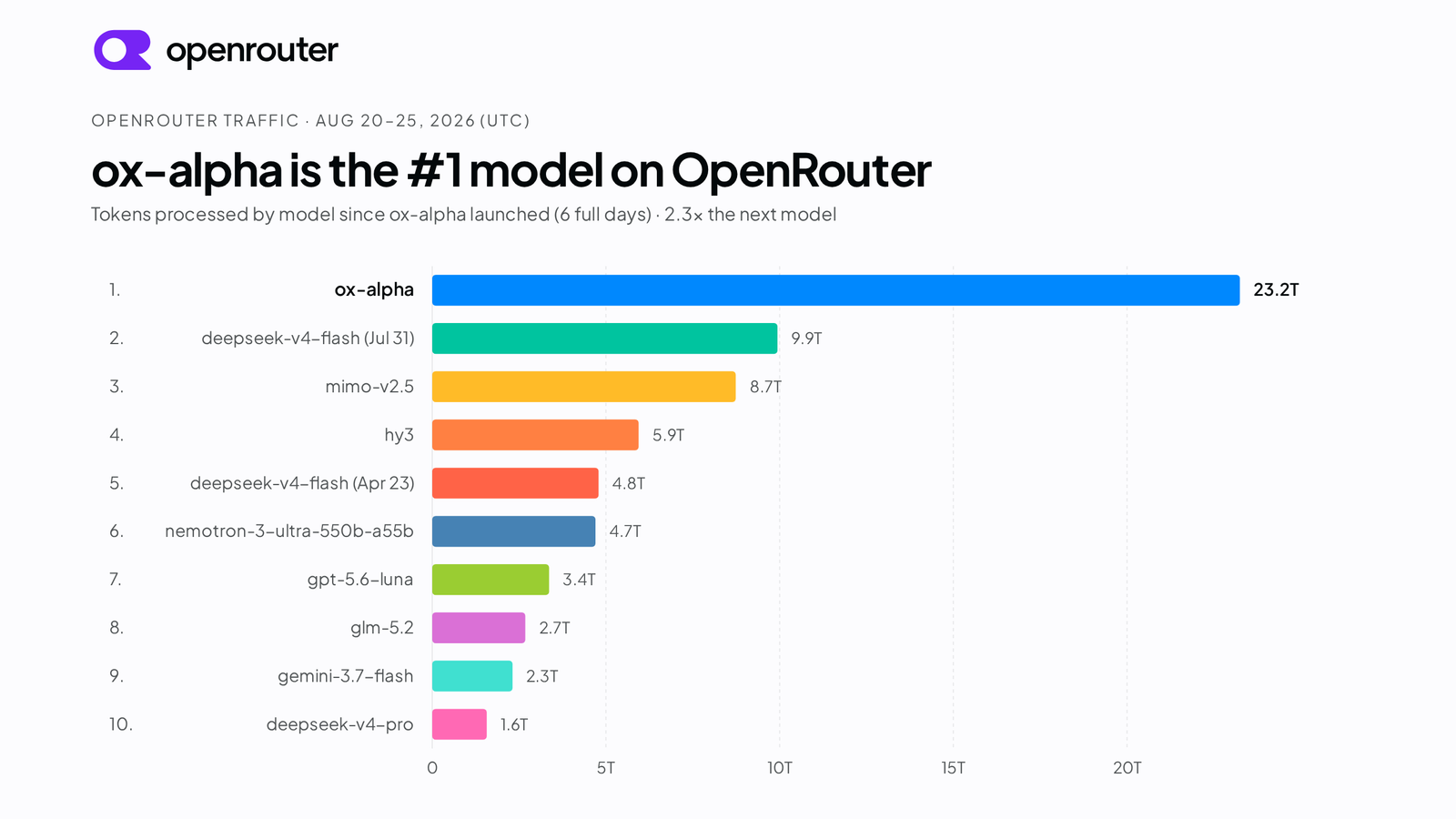
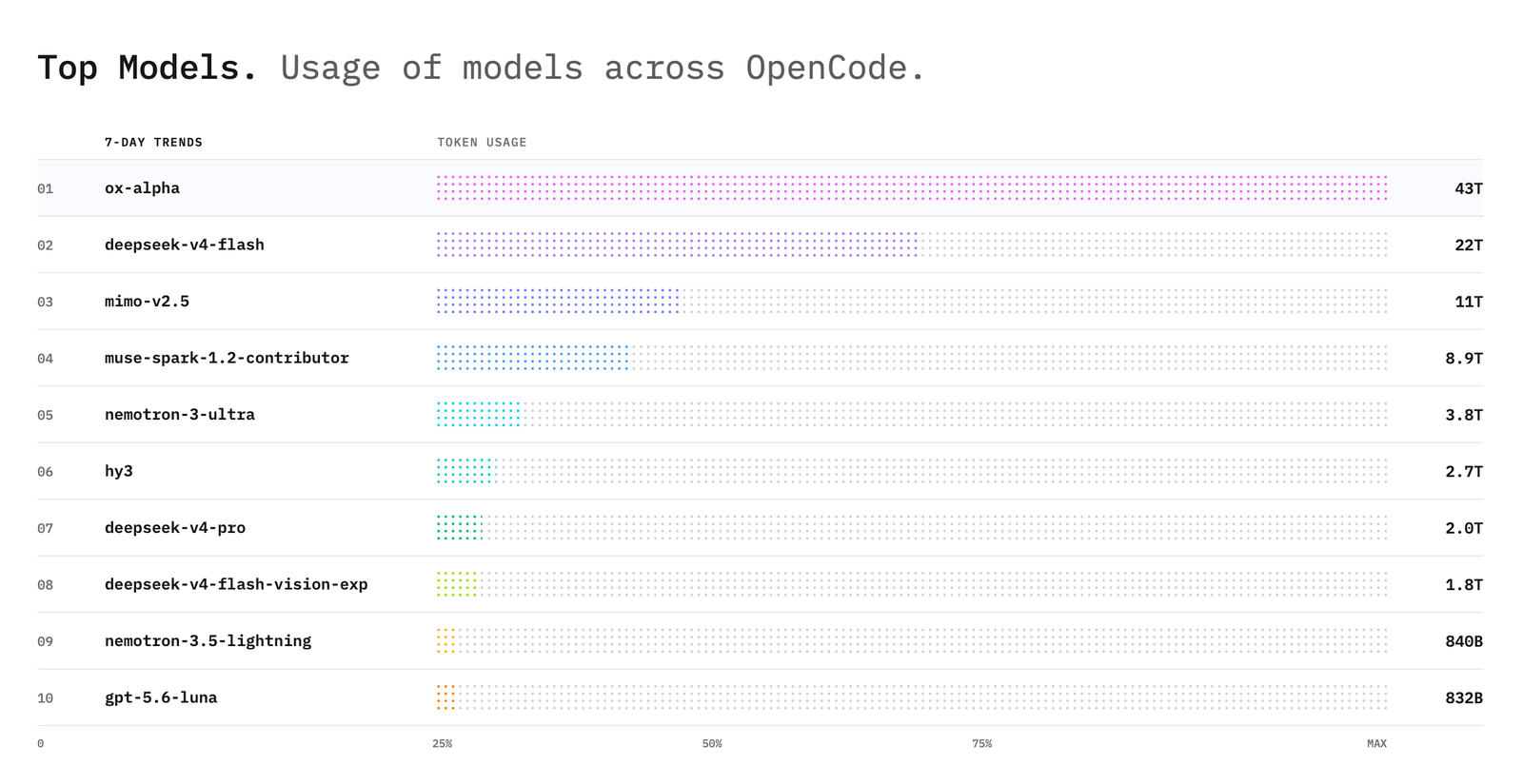
The Ox Alpha story is a major reason GLM 5.3 Flash gained attention so quickly. Before the public release, Z.ai tested the model anonymously as Ox Alpha on OpenCode and OpenRouter. Users were able to try the model without knowing which company had built it. This created a useful blind test because the model could build a reputation based on output before the official brand was attached to it.
Z.ai later confirmed that Ox Alpha was GLM 5.3 Flash. According to the company, the preview became the most popular model of the week during the anonymous test. That reveal created a second wave of attention because people who had already tried Ox Alpha suddenly had a name, a model card, pricing, open weights, and a direct API option to examine.
GLM 5.3 Flash benchmarks
The official GLM 5.3 Flash benchmarks are impressive. Z.ai reports clear gains over GLM 5.2 across coding and agent tasks. On DeepSWE v1.1, Z.ai reports a score of 63.4 for GLM 5.3 Flash compared with 46.2 for GLM 5.2. On AutomationBench v1.0.6, the company reports 48.8 compared with 26.2. Toolathlon Verified is listed at 78.4 compared with 59.9 for GLM 5.2.
| Benchmark | GLM 5.3 Flash | GLM 5.2 |
|---|---|---|
| Terminal Bench 2.1 | 84.3 | 81.0 |
| DeepSWE v1.1 | 63.4 | 46.2 |
| Toolathlon Verified | 78.4 | 59.9 |
| AutomationBench v1.0.6 | 48.8 | 26.2 |
| Agents Last Exam | 26.3 | 20.4 |
| GDPval AA v2 | 1773 | 1504 |
Simple benchmark graph
Terminal Bench 2.1
GLM 5.3 Flash  █████████████████ 84.3
GLM 5.2        ████████████████  81.0

DeepSWE v1.1
GLM 5.3 Flash  █████████████     63.4
GLM 5.2        █████████         46.2

AutomationBench
GLM 5.3 Flash  ██████████        48.8
GLM 5.2        █████             26.2
These numbers are useful, but there is an important SEO and editorial point here. They are vendor reported benchmark results. Z.ai provides evaluation details for several tests, which improves transparency, but readers should still separate company results from independent measurements.
Artificial Analysis provides that second perspective. Its current GLM 5.3 Flash page gives the model an Intelligence Index score of 57 and reports output speed around 49.8 tokens per second. Artificial Analysis describes the model as highly capable and reasonably priced among similar open weight models, while also noting that it is relatively slow and verbose. This independent view supports the idea that GLM 5.3 Flash is strong, but it also shows that low cost does not mean class leading performance in every metric.
See the Artificial Analysis GLM 5.3 Flash page for the latest independent comparison data.
GLM 5.3 Flash pricing and OpenRouter value
Pricing is the section where GLM 5.3 Flash becomes especially difficult to ignore. The standard Z.ai General API price is listed at 0.15 dollars per million input tokens, 0.03 dollars per million cached input tokens, and 0.50 dollars per million output tokens. Z.ai also launched the model with a temporary discount through September 9 2026, reducing the price to 0.075 dollars for input and 0.25 dollars for output.
OpenRouter currently lists GLM 5.3 Flash through several providers. Some routes reflect the launch discount while others use the standard price, so users should always check the provider row before sending large workloads. This is important because OpenRouter can route the same model through multiple infrastructure providers, and price can vary.
| Model | Input price per million tokens | Output price per million tokens |
|---|---|---|
| GLM 5.3 Flash launch price | 0.075 dollars | 0.25 dollars |
| GLM 5.3 Flash standard price | 0.15 dollars | 0.50 dollars |
| GLM 5.3 | 1.40 dollars | 4.40 dollars |
| GPT 5.6 Luna on OpenRouter | 0.20 dollars | 1.20 dollars |
| GPT 5.6 Sol on OpenRouter | 2.00 dollars | 10.00 dollars |
You can check the current Z.ai models on OpenRouter before using the API because pricing and provider availability can change.
GLM 5.3 Flash vs GPT 5.6
A useful GLM 5.3 Flash vs GPT 5.6 comparison needs to be specific because GPT 5.6 is a family with multiple configurations. Comparing one GLM model against the entire GPT 5.6 family as if every route were identical would be misleading. The fairest approach is to compare current public pricing and then look at a specific independent benchmark configuration.
On OpenRouter, GLM 5.3 Flash is currently much cheaper than GPT 5.6 Sol. GLM 5.3 Flash is listed at the launch price of 0.075 dollars per million input tokens and 0.25 dollars per million output tokens on supported discounted routes, while GPT 5.6 Sol is listed at 2 dollars input and 10 dollars output. GPT 5.6 Luna is much cheaper than Sol, but GLM 5.3 Flash still has a lower output price.
Artificial Analysis currently compares GLM 5.3 Flash with GPT 5.6 Sol at low reasoning effort. In that comparison, GLM 5.3 Flash scores 57 on the Intelligence Index while GPT 5.6 Sol low scores 51. The speed result moves in the other direction. GPT 5.6 Sol low is faster, at about 75 output tokens per second, while GLM 5.3 Flash is around 49 output tokens per second.
| Comparison area | GLM 5.3 Flash | GPT 5.6 Sol low |
|---|---|---|
| Artificial Analysis Intelligence Index | 57 | 51 |
| Approximate output speed | 49 tokens per second | 75 tokens per second |
| Context window | About 1 million tokens | About 1 million tokens |
| Open weights | Yes | No |
| API price position | Very low | Higher |
This does not mean GLM 5.3 Flash is universally better than GPT 5.6. It means GLM 5.3 Flash has a powerful value argument. GPT 5.6 can still be the better choice when speed, ecosystem integration, specific tools, or a particular OpenAI workflow matters more than token price.
The key takeaway is simple. If your priority is capability per dollar, GLM 5.3 Flash is extremely competitive. If your priority is fastest generation or you rely heavily on the OpenAI ecosystem, GPT 5.6 can still make more sense.
GLM 5.3 Flash local deployment and open weights
One of the biggest differences between GLM 5.3 Flash and closed models is that the weights are publicly available under the MIT license. The official Hugging Face page lists support for SGLang, vLLM, TokenSpeed, and KTransformers. This gives advanced users more control over deployment, privacy, experimentation, and infrastructure.
If you are specifically interested in open models and self hosting, the GitHub Repositories section and the Free AI and API Access section on AI Tech Ledger are useful places to watch for future setup guides.
Where GLM 5.3 Flash is genuinely strong
The strongest case for GLM 5.3 Flash is the combination of low cost, a very large context window, multimodal input, and open weights. That package is especially attractive for coding agents, large repository analysis, long research sessions, visual tasks, and developers who want more control over deployment.
Where the GLM 5.3 Flash hype can be misleading
The biggest risk is treating vendor benchmark charts as final proof. Z.ai has published useful methodology notes and detailed benchmark tables, but the company is still evaluating its own product. Independent testing matters because different prompts, harnesses, reasoning settings, context management methods, and infrastructure can change results.
Who should use GLM 5.3 Flash
| User type | Recommendation |
|---|---|
| Developers testing coding agents | Excellent fit because of low cost, long context, and tool focused capability |
| Users with large documents or repositories | Strong fit because of the large context window |
| Multimodal AI users | Strong fit because image and video input are supported |
| Open model researchers | Strong fit because weights are available under MIT |
| Users who need maximum output speed | Compare carefully because several competitors are faster |
| Casual users who only need simple chat | Useful, but the advanced capabilities may be more than necessary |
Is GLM 5.3 Flash the best value AI model right now
Based on the evidence available today, GLM 5.3 Flash deserves to be in the conversation for best value AI model. The combination of strong benchmark performance, open weights, a very large context window, multimodal input, and extremely low API pricing is unusual. The Ox Alpha preview also showed that the model could attract users before its identity was publicly known, which makes the launch story more credible than a purely marketing driven release.
Still, calling any model the absolute best requires context. GLM 5.3 Flash is not the fastest option, and vendor benchmark results should be balanced against independent testing. GPT 5.6 remains attractive for users who value speed, OpenAI integration, or specific product workflows. GLM 5.3 can also remain the better fit for users who want the premium Z.ai model rather than the efficiency focused Flash tier.
For developers, researchers, and power users who care about cost efficiency, GLM 5.3 Flash currently looks like one of the smartest models to test. Its biggest strength is not that it wins every chart. Its biggest strength is that it gets surprisingly close to much more expensive models while costing dramatically less.
GLM 5.3 Flash review FAQ
Is Ox Alpha the same as GLM 5.3 Flash
Yes. Z.ai confirmed that the anonymous Ox Alpha model tested on OpenCode and OpenRouter was GLM 5.3 Flash.
Is GLM 5.3 Flash free
The model weights are publicly available, but hosted API use is generally paid. Launch discounts and provider promotions can reduce the price. Check Z.ai and OpenRouter for the latest rates.
Can GLM 5.3 Flash run locally
Yes. The official model card lists SGLang, vLLM, TokenSpeed, and KTransformers as supported deployment options. However, the full model is very large, so practical local deployment requires capable hardware or optimized infrastructure.
Is GLM 5.3 Flash better than GPT 5.6
It can be better for value. Current independent comparisons show strong intelligence scores at a much lower price, while some GPT 5.6 variants are faster. The best choice depends on your workload.
Can I use GLM 5.3 Flash on OpenRouter
Yes. OpenRouter lists GLM 5.3 Flash through multiple providers. Pricing can differ by provider, so check the live model page before using it at scale.
What is the main advantage of GLM 5.3 Flash
The main advantage is the combination of capability, one million token context, multimodal input, open weights, and low API pricing.
Final verdict
This GLM 5.3 Flash review finds that the hype is not entirely misleading. Ox Alpha created attention, but the final release has enough substance to justify serious interest. The model offers a rare mix of long context, multimodal input, open weights, coding and agent capability, and low pricing. Independent data also suggests that it is genuinely competitive rather than only impressive in first party charts.
The sensible conclusion is not that GLM 5.3 Flash defeats GPT 5.6 or every flagship model in every situation. The stronger conclusion is that it may be one of the best current choices for users who want the most intelligence possible without paying flagship prices. If you are building coding agents, testing long context workflows, experimenting with multimodal tools, or simply trying to reduce API cost, GLM 5.3 Flash should be on your shortlist.
Sources checked August 2026: Z.ai, Hugging Face, OpenRouter, and Artificial Analysis.


Comments are closed.
[…] GLM 5.3 Flash Review for a current model benchmark, pricing, and OpenRouter comparison. […]