GPT-Live-1 API: Pricing, Full-Duplex Voice, Benchmarks and What Developers Need to Know

OpenAI released the GPT-Live-1 API on September 10, 2026, bringing the full-duplex voice system already used in ChatGPT Voice to developers building phone agents, support bots, tutors, meeting assistants, and other real-time applications. The launch matters because GPT-Live-1 is not simply a faster text-to-speech model. It changes the architecture of a voice agent: the voice layer can listen and speak at the same time while a separate backend model handles deeper reasoning, tools, and actions.
That split is the reason GPT-Live-1 API is attracting so much attention. Developers no longer have to choose between a natural conversation model and a powerful reasoning model in the same way. GPT-Live-1 can stay responsive at the front end, while a model such as GPT-6 Astra, a lighter model such as Luna, or even a third-party model works behind it.
This article explains GPT-Live-1 pricing, architecture, benchmarks, use cases, limitations, and practical deployment questions.
GPT-Live-1 API at a glance
| Area | GPT-Live-1 API | Why it matters |
|---|---|---|
| Release date | September 10, 2026 | Newly available to API developers |
| Voice-layer price | $0.05 per minute | Backend model and agent-harness costs are separate |
| Conversation style | Full duplex | Can listen and speak at the same time |
| Reasoning | Delegates to a backend model | Voice stays responsive while deeper work happens |
| Connections | WebRTC, WebSockets, telephony | Supports browsers, servers, and phone workflows |
| Built-in output | ASR transcript and response text | Easier logging, UI display, and downstream processing |
| Developer controls | Tone, pace, style, language, response length | Voice behavior can be shaped through instructions |
What is the GPT-Live-1 API?
GPT-Live-1 is OpenAI’s new voice model for continuous, natural conversation. Traditional voice assistants often work as a pipeline: speech is converted to text, an LLM writes a response, and a text-to-speech system reads it aloud. That design can work well, but every handoff adds latency and creates another place where timing or context can break.
GPT-Live-1 uses a different approach. OpenAI describes it as a full-duplex model, meaning it can process incoming audio while producing outgoing audio. It can therefore react to a person interrupting, pausing, laughing, saying a short acknowledgement, or changing direction before the model has finished speaking.

The important second part is delegation. GPT-Live-1 does not need to do every difficult task itself. When the user asks for something that requires search, reasoning, database access, code execution, or another tool, the voice layer can hand the task to a backend agent. The conversation can continue while that work is happening.
This resembles a front-desk employee who keeps the conversation moving while a specialist works in the background. For developers, it can be cleaner than forcing one real-time model to handle listening, speaking, reasoning, tool calls, and long-running work at once.
Why GPT-Live-1 full-duplex voice is different
| Architecture | How it works | Main trade-off |
|---|---|---|
| Cascaded STT → LLM → TTS | Three stages process a turn one after another | Flexible, but handoffs add delay and orchestration |
| Turn-based real-time model | One model handles audio but usually waits for a turn boundary | Lower latency, but pauses and interruptions can still feel rigid |
| GPT-Live-1 | Voice model listens and speaks continuously while delegating deeper work | More natural interaction, but total system cost still depends on the backend |
The difference is especially visible in messy real conversations. People do not wait politely for an assistant to finish. They hesitate, say “actually, make that Friday,” speak to another person nearby, or use quick signals such as “mm-hmm” that should not automatically be treated as a new question. A full-duplex system is built around that behavior instead of treating every silence as a hard turn boundary.
OpenAI’s earlier GPT-Live launch explained that the model can make interaction decisions many times per second: whether to keep listening, speak, pause, interrupt, or invoke a tool. That makes the conversation layer more independent from the slower reasoning layer.
GPT-Live-1 API pricing: what $0.05 per minute really means
OpenAI lists GPT-Live-1 API pricing at $0.05 per minute for the front-end voice layer. That number is attractive because it is easy to understand, but it is not the total cost of a production voice agent. The backend model, tools, retrieval system, telephony provider, storage, observability, and other infrastructure can add separate charges.
| Voice usage | GPT-Live-1 voice-layer cost |
|---|---|
| 5 minutes | $0.25 |
| 30 minutes | $1.50 |
| 1,000 minutes | $50 |
| 10,000 minutes | $500 |
| 100,000 minutes | $5,000 |
Those examples cover only the voice layer. A simple restaurant-reservation assistant paired with a lightweight backend may have very different economics from a technical-support agent that repeatedly sends large contexts to a frontier reasoning model.
The split also lets developers route routine work to cheaper models and escalate difficult cases to stronger reasoning models.
If you are comparing the reasoning side of that stack, our GPT-6 Astra vs Claude Fable 5.1 comparison looks at the broader coding and agentic-work trade-offs behind frontier models.
GPT-Live-1 API benchmarks: the numbers that matter
OpenAI says GPT-Live-1 improves its Full Duplex Bench performance by 30 percentage points over GPT-Realtime-2.1. The company’s developer announcement also reports a 97.3% score on Artificial Analysis’s Conversational Dynamics benchmark, which evaluates behavior such as waiting, turn-taking, interruptions, and short acknowledgements.
OpenAI also reports 80.1% on Full Duplex Bench v1.5 interactivity, compared with 45.4% for GPT-Realtime-2.1. On a turn-taking latency evaluation, GPT-Live-1 began responding about 0.798 seconds after a user’s turn ended, versus 1.41 seconds for GPT-Realtime-2.1. These numbers are useful because they measure the part of voice AI users notice immediately: whether the system feels awkward, slow, or constantly interrupts.
For task completion, OpenAI says a GPT-Live-1 setup paired with GPT-6 Astra at medium reasoning effort ranks first on Tau3, an end-to-end voice-agent benchmark covering customer-service work. This should not be interpreted as the voice model alone becoming twice as intelligent. The architecture deliberately pushes difficult work to a strong backend model, so the score reflects the combined system.
That distinction matters. A GPT-Live-1 agent connected to a cheaper or smaller backend may not reproduce the same benchmark result. Developers should benchmark the exact stack they intend to deploy, including the prompt, tools, retrieval layer, model, and retry policy.
Early customer results are just as interesting
The launch includes several early customer examples. Speak, a language-learning company, reported that GPT-Live-1 gave learners more time to think before responding and reduced interruptions by almost 80% compared with previous turn-based systems.
EliseAI reported an architecture benefit that may matter even more to engineering teams: compared with its cascaded voice build, GPT-Live-1 simplified the code base by 80% and removed roughly 23,000 lines of code. That is a customer-reported result rather than an independent benchmark, but it illustrates why companies may care about the API even if raw latency improvements are not their only goal.
How backend delegation changes voice-agent architecture
The most important technical idea in GPT-Live-1 is not the voice itself. It is the separation between the conversation layer and the “brain” that performs deeper work.
Imagine a customer calls an airline. The voice agent can greet the caller, listen naturally, handle a correction, and ask for missing information. If the caller only wants a flight status, a lightweight backend can handle it. If the caller needs a complicated rebooking across multiple legs with policy checks and tool calls, GPT-Live-1 can delegate to a stronger reasoning model without making the entire voice session depend on that model’s latency.
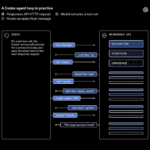
The same design can be applied to coding. OpenAI’s launch material demonstrates GPT-Live-1 passing conversation context to Codex, then receiving the result back into the live session. A developer could therefore build a hands-free coding assistant that keeps the conversation natural while a separate coding agent reads files or executes a longer task.
For readers experimenting with tool-connected agents, our Hermes Agent installation guide explains the broader idea of giving an AI model tools and a working environment rather than treating it as a simple chatbot.
What developers can build with the GPT-Live-1 API
The API is most compelling where conversation timing matters. A delay that feels acceptable in text can make a voice agent feel unnatural.
| Use case | Why GPT-Live-1 fits | What still needs engineering |
|---|---|---|
| Customer support | Natural interruption handling and backend tools | Identity, permissions, escalation, logging |
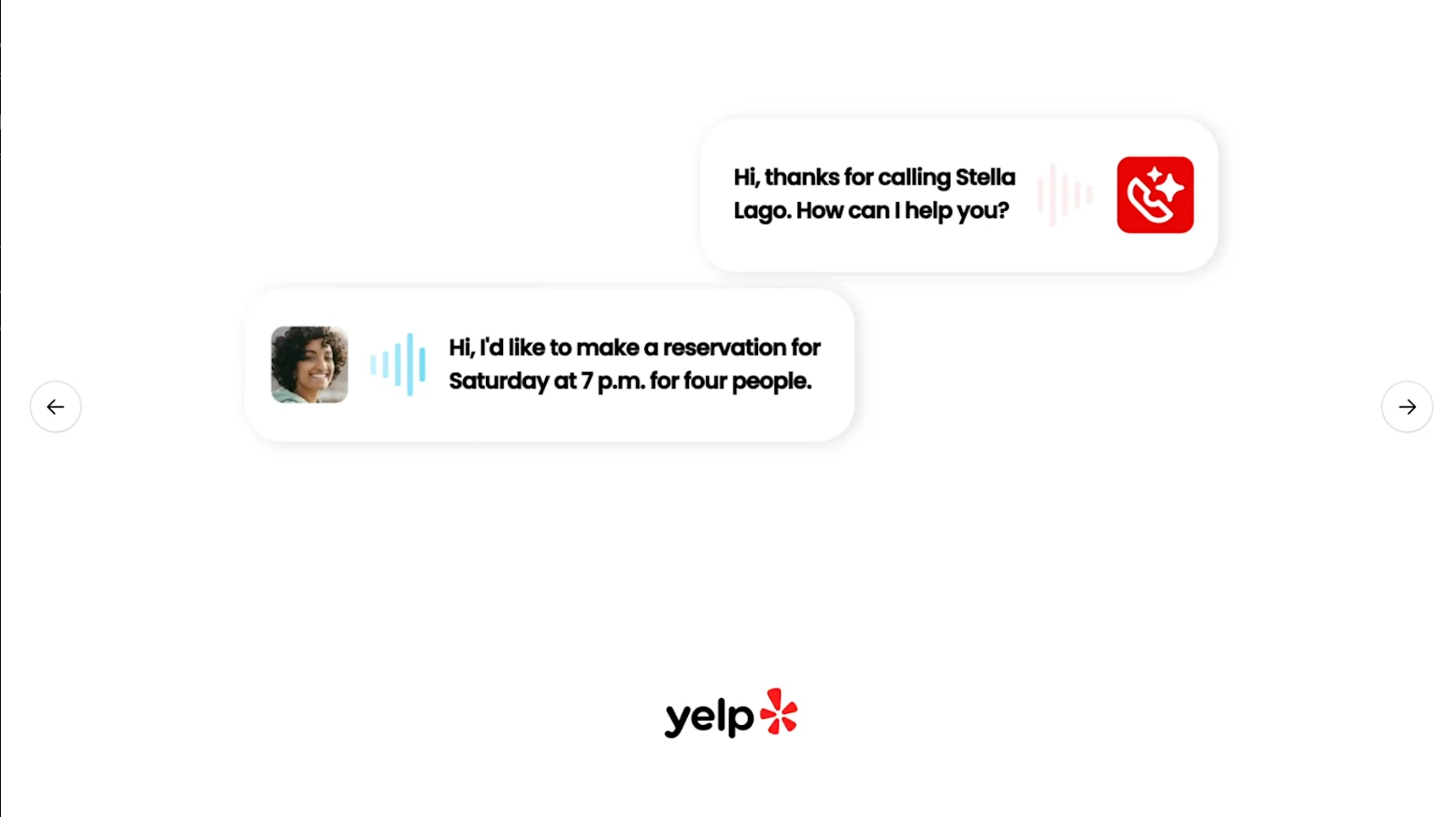
| Restaurant reservations | Telephony and noisy-environment handling | Booking integrations and confirmation rules |
| Language tutoring | Better pause handling and conversational pacing | Curriculum, learner state, progress tracking |
| Healthcare scheduling | Hands-free conversation plus tool delegation | Privacy, consent, compliance, human handoff |
| Meeting assistants | Continuous listening and action delegation | Permission boundaries before writing to systems |
| Voice coding copilots | Conversation can continue while coding agent works | Repository permissions, sandboxing, confirmations |
Community experiments appeared almost immediately. One Reddit developer put GPT-Live-1 into a meeting using Agora RTC; the agent listened, summarized the discussion, and created a Kanban task when asked. It is anecdotal, but it shows the appeal of combining full-duplex voice with tools.
GPT-Live-1 API voice controls and developer features
OpenAI is giving developers more control over how the agent sounds and behaves. The system prompt can shape tone, pace, conversational style, language, and response length. OpenAI also says the model can adapt to the speaker’s tone and pace.
The API provides built-in automatic speech-recognition transcripts and response text. That is useful for live captions, audit logs, customer-service transcripts, search, analytics, and systems that need a text representation of what happened during a call. Keyword biasing can help the model recognize product names, acronyms, or domain-specific terms, while turn detection remains available for applications that still want explicit turn boundaries.
For connectivity, OpenAI’s developer announcement lists WebRTC for browser applications, WebSockets for server integrations, and telephony support. This means the same voice architecture can sit inside a web app, a server-controlled agent, or a phone workflow.
OpenAI also expanded the available real-time voices across accents, dialects, and languages. The launch page lists Quartz, Ripple, Vesper, Willow, Stone, Gleam, Meridian, Bossa, Tempo, Beacon, Delta, and Cinder. Custom voice access is available through OpenAI sales rather than as a normal self-service option.
What GPT-Live-1 still does not solve
A better voice layer does not remove the hard parts of deploying an autonomous agent. In many businesses, those hard parts are permissions, policy, data quality, failure recovery, and deciding when the system must ask a human for approval.
Cost is still multi-layered. The $0.05-per-minute price covers the voice layer. Backend reasoning, telephony, retrieval, storage, and tools add to the bill.
Tool safety still matters. A meeting assistant that can create tasks, send emails, move money, cancel bookings, or modify customer records needs clear permission boundaries. The fact that the voice interaction feels natural should not make destructive actions automatic.
Language quality can vary. OpenAI has said GPT-Live is optimized for some of ChatGPT’s most popular languages, but certain languages may still have non-native accents or fluency gaps. Teams serving multilingual users should test the exact languages, accents, environments, and phone networks their customers use.
Independent benchmarking is still needed. Many of the strongest launch numbers come from OpenAI’s evaluations or early customers. Artificial Analysis provides an independent conversational-dynamics benchmark, but a production deployment should still be tested on its own call types and tools.
Reasoning quality depends on the backend. The biggest task-completion gains are produced by a system, not the voice layer in isolation. Choosing a faster, cheaper backend can change both quality and cost.
GPT-Live-1 API vs GPT-Realtime: which approach makes sense?
GPT-Realtime-style systems remain useful when developers want a single real-time model to handle the interaction directly. GPT-Live-1 is more interesting when the application needs natural overlapping speech and also needs a separate agent to perform deeper, slower, or more expensive work.
| Choose GPT-Live-1 when… | A simpler real-time stack may be enough when… |
|---|---|
| Interruptions and backchanneling are central to the experience | Users mostly speak in clean, discrete turns |
| You need long-running reasoning or tool calls in the background | The conversation itself contains most of the work |
| You want different backend models for different task difficulty | You prefer one model and one billing path |
| You are building phone or high-volume conversational workflows | Your use case is occasional voice input inside a broader app |
The practical question is whether separating voice from reasoning makes your product simpler, cheaper, safer, or more responsive.
Security, privacy and audio provenance
Voice calls can contain sensitive personal or account data. Production deployments need clear retention, consent, authentication, access-control, and human-escalation policies suited to their industry and jurisdiction.
OpenAI also introduced provenance support for GPT-Live audio. In a July 31 update, the company said supported audio generated through ChatGPT Voice and the OpenAI API includes SynthID watermarking. OpenAI’s public verification tool and verification API can detect supported provenance signals. This does not solve every deepfake or misuse problem, but it gives developers and organizations another mechanism for identifying supported OpenAI-generated audio.
Should you use the GPT-Live-1 API now?
GPT-Live-1 is worth testing if voice is a core part of the product rather than a cosmetic feature. The biggest potential benefit is not that it makes an assistant “sound human.” It is that the conversation layer can remain responsive while the actual agent performs work elsewhere.
A practical pilot should measure four things: interruption rate, time to first useful response, end-to-end task completion, and cost per completed task. It should also measure how often the system needs human rescue. Those metrics will tell you more than a launch benchmark alone.
For simple workloads, pairing GPT-Live-1 with a low-cost backend may be enough. For difficult technical, research, or customer-support work, a stronger model may justify the extra cost. The flexibility to change that backend is one of the API’s most important design choices.
FAQ about the GPT-Live-1 API
How much does GPT-Live-1 API cost?
OpenAI lists GPT-Live-1 at $0.05 per minute for the front-end voice layer. Backend model usage, tools, telephony, and other infrastructure are billed separately.
Is GPT-Live-1 the same model used in ChatGPT Voice?
GPT-Live-1 was first introduced for ChatGPT Voice in July 2026. The September 10 release makes the model available to API developers with additional controls and integration options.
Can GPT-Live-1 use GPT-6 Astra?
Yes. OpenAI specifically describes GPT-Live-1 delegating deeper reasoning and tool calls to a backend text model such as GPT-6 Astra. Developers can also choose other supported models or a third-party backend.
Does GPT-Live-1 support phone calls?
Yes. OpenAI lists telephony as a supported deployment option, alongside WebRTC for browser applications and WebSockets for server integrations.
Does GPT-Live-1 provide transcripts?
Yes. The API natively provides ASR transcripts and response text, which can be used for captions, logs, search, analytics, and downstream workflows.
Is GPT-Live-1 always better than GPT-Realtime?
No. GPT-Live-1 is designed around continuous conversation and backend delegation. A simpler real-time model may still be sufficient for applications with clean turn-taking and little need for background reasoning or tools.
Final take
GPT-Live-1 API is one of the more important voice-agent changes of 2026 because it separates natural conversation from deep reasoning. At $0.05 per minute for the voice layer, developers can build an interface that listens, speaks, handles interruptions, and keeps a conversation moving while another model or agent handles complex work.
The launch numbers are promising, but production reality matters more: noisy calls, accents, permission boundaries, backend costs, and tasks where mistakes have consequences.
For developers already building agent systems, the question is no longer whether voice can be added. It is whether a full-duplex conversation layer can make the agent useful enough that people actually want to talk to it.
Sources: OpenAI GPT-Live-1 API launch, OpenAI GPT-Live launch, OpenAI Developer Community announcement, and developer meeting demo on Reddit.